
720 lines
27 KiB
Markdown
720 lines
27 KiB
Markdown
<div align="center">
|
||
<img src="https://capsule-render.vercel.app/api?type=waving&color=gradient&height=200§ion=header&text=Telegram%20MCP%20Server&fontSize=50&fontAlignY=35&animation=fadeIn&fontColor=FFFFFF&descAlignY=55&descAlign=62" alt="Telegram MCP Server" width="100%" />
|
||
</div>
|
||
|
||

|
||
[](https://opensource.org/licenses/Apache-2.0)
|
||
[](https://github.com/chigwell/telegram-mcp/actions/workflows/python-lint-format.yml)
|
||
[](https://github.com/chigwell/telegram-mcp/actions/workflows/docker-build.yml)
|
||
|
||
---
|
||
|
||
## 🤖 MCP in Action
|
||
|
||
Here's a demonstration of the Telegram MCP capabilities in [Claude](https://docs.anthropic.com/en/docs/agents-and-tools/mcp):
|
||
|
||
**Basic usage example:**
|
||
|
||

|
||
|
||
1. **Example: Asking Claude to analyze chat history and send a response:**
|
||
|
||

|
||
|
||
2. **Successfully sent message to the group:**
|
||
|
||

|
||
|
||
As you can see, the AI can seamlessly interact with your Telegram account, retrieving and displaying your chats, messages, and other data in a natural way.
|
||
|
||
---
|
||
|
||
A full-featured Telegram integration for Claude, Cursor, and any MCP-compatible client, powered by [Telethon](https://docs.telethon.dev/) and the [Model Context Protocol (MCP)](https://modelcontextprotocol.io/). This project lets you interact with your Telegram account programmatically, automating everything from messaging to group management.
|
||
|
||
|
||
---
|
||
|
||
## 🚀 Features & Tools
|
||
|
||
This MCP server exposes a huge suite of Telegram tools. **Every major Telegram/Telethon feature is available as a tool!**
|
||
|
||
### Chat & Group Management
|
||
- **get_chats(page, page_size)**: Paginated list of chats
|
||
- **list_chats(chat_type, limit)**: List chats with metadata and filtering
|
||
- **get_chat(chat_id)**: Detailed info about a chat
|
||
- **create_group(title, user_ids)**: Create a new group
|
||
- **invite_to_group(group_id, user_ids)**: Invite users to a group or channel
|
||
- **create_channel(title, about, megagroup)**: Create a channel or supergroup
|
||
- **edit_chat_title(chat_id, title)**: Change chat/group/channel title
|
||
- **delete_chat_photo(chat_id)**: Remove chat/group/channel photo
|
||
- **leave_chat(chat_id)**: Leave a group or channel
|
||
- **get_participants(chat_id)**: List all participants
|
||
- **get_admins(chat_id)**: List all admins
|
||
- **get_banned_users(chat_id)**: List all banned users
|
||
- **promote_admin(chat_id, user_id)**: Promote user to admin
|
||
- **demote_admin(chat_id, user_id)**: Demote admin to user
|
||
- **ban_user(chat_id, user_id)**: Ban user
|
||
- **unban_user(chat_id, user_id)**: Unban user
|
||
- **get_invite_link(chat_id)**: Get invite link
|
||
- **export_chat_invite(chat_id)**: Export invite link
|
||
- **import_chat_invite(hash)**: Join chat by invite hash
|
||
- **join_chat_by_link(link)**: Join chat by invite link
|
||
- **subscribe_public_channel(channel)**: Subscribe to a public channel or supergroup by username or ID
|
||
|
||
### Messaging
|
||
- **get_messages(chat_id, page, page_size)**: Paginated messages
|
||
- **list_messages(chat_id, limit, search_query, from_date, to_date)**: Filtered messages
|
||
- **list_topics(chat_id, limit, offset_topic, search_query)**: List forum topics in supergroups
|
||
- **send_message(chat_id, message)**: Send a message
|
||
- **reply_to_message(chat_id, message_id, text)**: Reply to a message
|
||
- **edit_message(chat_id, message_id, new_text)**: Edit your message
|
||
- **delete_message(chat_id, message_id)**: Delete a message
|
||
- **forward_message(from_chat_id, message_id, to_chat_id)**: Forward a message
|
||
- **pin_message(chat_id, message_id)**: Pin a message
|
||
- **unpin_message(chat_id, message_id)**: Unpin a message
|
||
- **mark_as_read(chat_id)**: Mark all as read
|
||
- **get_message_context(chat_id, message_id, context_size)**: Context around a message
|
||
- **get_history(chat_id, limit)**: Full chat history
|
||
- **get_pinned_messages(chat_id)**: List pinned messages
|
||
- **get_last_interaction(contact_id)**: Most recent message with a contact
|
||
- **create_poll(chat_id, question, options, multiple_choice, quiz_mode, public_votes, close_date)**: Create a poll
|
||
- **list_inline_buttons(chat_id, message_id, limit)**: Inspect inline keyboards to discover button text/index
|
||
- **press_inline_button(chat_id, message_id, button_text, button_index)**: Trigger inline keyboard callbacks by label or index
|
||
- **send_reaction(chat_id, message_id, emoji, big=False)**: Add a reaction to a message
|
||
- **remove_reaction(chat_id, message_id)**: Remove a reaction from a message
|
||
- **get_message_reactions(chat_id, message_id, limit=50)**: Get all reactions on a message
|
||
|
||
### Contact Management
|
||
- **list_contacts()**: List all contacts
|
||
- **search_contacts(query)**: Search contacts
|
||
- **add_contact(phone, first_name, last_name)**: Add a contact
|
||
- **delete_contact(user_id)**: Delete a contact
|
||
- **block_user(user_id)**: Block a user
|
||
- **unblock_user(user_id)**: Unblock a user
|
||
- **import_contacts(contacts)**: Bulk import contacts
|
||
- **export_contacts()**: Export all contacts as JSON
|
||
- **get_blocked_users()**: List blocked users
|
||
- **get_contact_ids()**: List all contact IDs
|
||
- **get_direct_chat_by_contact(contact_query)**: Find direct chat with a contact
|
||
- **get_contact_chats(contact_id)**: List all chats with a contact
|
||
|
||
### User & Profile
|
||
- **get_me()**: Get your user info
|
||
- **update_profile(first_name, last_name, about)**: Update your profile
|
||
- **set_profile_photo(file_path)**: Set a profile photo from an allowed root path
|
||
- **delete_profile_photo()**: Remove your profile photo
|
||
- **get_user_photos(user_id, limit)**: Get a user's profile photos
|
||
- **get_user_status(user_id)**: Get a user's online status
|
||
|
||
### Media
|
||
- **get_media_info(chat_id, message_id)**: Get info about media in a message
|
||
- **send_file(chat_id, file_path, caption)**: Send a local file from allowed roots
|
||
- **download_media(chat_id, message_id, file_path)**: Save message media under allowed roots
|
||
- **upload_file(file_path)**: Upload a local file and return upload metadata
|
||
- **send_voice(chat_id, file_path)**: Send `.ogg/.opus` voice note from allowed roots
|
||
- **send_sticker(chat_id, file_path)**: Send `.webp` sticker from allowed roots
|
||
- **edit_chat_photo(chat_id, file_path)**: Update chat photo from allowed roots
|
||
|
||
### Search & Discovery
|
||
- **search_public_chats(query, limit)**: Search public chats/channels/bots with a configurable result limit
|
||
- **search_messages(chat_id, query, limit)**: Search messages in a chat
|
||
- **search_global(query, page, page_size)**: Search messages globally with pagination
|
||
- **resolve_username(username)**: Resolve a username to ID
|
||
|
||
### Stickers, GIFs, Bots
|
||
- **get_sticker_sets()**: List sticker sets
|
||
- **get_bot_info(bot_username)**: Get info about a bot
|
||
- **set_bot_commands(bot_username, commands)**: Set bot commands (bot accounts only)
|
||
|
||
### Privacy, Settings, and Misc
|
||
- **get_privacy_settings()**: Get privacy settings
|
||
- **set_privacy_settings(key, allow_users, disallow_users)**: Set privacy settings
|
||
- **mute_chat(chat_id)**: Mute notifications
|
||
- **unmute_chat(chat_id)**: Unmute notifications
|
||
- **archive_chat(chat_id)**: Archive a chat
|
||
- **unarchive_chat(chat_id)**: Unarchive a chat
|
||
- **get_recent_actions(chat_id)**: Get recent admin actions
|
||
|
||
### Drafts
|
||
- **save_draft(chat_id, message, reply_to_msg_id, no_webpage)**: Save a draft message to a chat/channel
|
||
- **get_drafts()**: Get all draft messages across all chats
|
||
- **clear_draft(chat_id)**: Clear/delete a draft from a specific chat
|
||
|
||
### Input Validation
|
||
|
||
To improve robustness, all functions accepting `chat_id` or `user_id` parameters now include input validation. You can use any of the following formats for these IDs:
|
||
|
||
- **Integer ID**: The direct integer ID for a user, chat, or channel (e.g., `123456789` or `-1001234567890`).
|
||
- **String ID**: The integer ID provided as a string (e.g., `"123456789"`).
|
||
- **Username**: The public username for a user or channel (e.g., `"@username"` or `"username"`).
|
||
|
||
The server will automatically validate the input and convert it to the correct format before making a request to Telegram. If the input is invalid, a clear error message will be returned.
|
||
|
||
## File-path Tools Security Model
|
||
|
||
File-path tools are available, but **disabled by default** until allowed roots are configured.
|
||
|
||
Supported file-path tools:
|
||
- `send_file`, `download_media`, `set_profile_photo`, `edit_chat_photo`, `send_voice`, `send_sticker`, `upload_file`
|
||
|
||
Security semantics (aligned with MCP filesystem server):
|
||
- Server-side allowlist via CLI positional arguments (fallback when Roots API is unsupported).
|
||
- Client-provided MCP Roots replace the server allowlist when available.
|
||
- If the client returns an empty Roots list, file-path tools are disabled (deny-all).
|
||
- All paths are resolved via realpath and must stay inside an allowed root.
|
||
- Traversal/glob-like patterns are rejected (`..`, `*`, `?`, `~`, etc.).
|
||
- Relative paths resolve against the first allowed root.
|
||
- Write tools default to `<first_root>/downloads/` when `file_path` is omitted.
|
||
|
||
Example server launch with allowlisted roots:
|
||
```bash
|
||
uv --directory /full/path/to/telegram-mcp run main.py /data/telegram /tmp/telegram-mcp
|
||
```
|
||
|
||
GIF tools are currently limited: `get_gif_search` and `send_gif` are available, while `get_saved_gifs` is not implemented due to reliability limits in Telethon/Telegram API interactions.
|
||
|
||
---
|
||
|
||
## 📋 Requirements
|
||
- Python 3.10+
|
||
- [Telethon](https://docs.telethon.dev/)
|
||
- [MCP Python SDK](https://modelcontextprotocol.io/docs/)
|
||
- [Claude Desktop](https://claude.ai/desktop) or [Cursor](https://cursor.so/) (or any MCP client)
|
||
|
||
---
|
||
|
||
## 🔧 Installation & Setup
|
||
|
||
### 1. Fork & Clone
|
||
|
||
```bash
|
||
git clone https://github.com/chigwell/telegram-mcp.git
|
||
cd telegram-mcp
|
||
```
|
||
|
||
### 2. Install Dependencies with uv
|
||
|
||
```bash
|
||
uv sync
|
||
```
|
||
|
||
### 3. Generate a Session String
|
||
|
||
```bash
|
||
uv run session_string_generator.py
|
||
```
|
||
Follow the prompts to authenticate and update your `.env` file.
|
||
|
||
### 4. Configure .env
|
||
|
||
Copy `.env.example` to `.env` and fill in your values:
|
||
|
||
```
|
||
TELEGRAM_API_ID=your_api_id_here
|
||
TELEGRAM_API_HASH=your_api_hash_here
|
||
TELEGRAM_SESSION_NAME=anon
|
||
TELEGRAM_SESSION_STRING=your_session_string_here
|
||
```
|
||
Get your API credentials at [my.telegram.org/apps](https://my.telegram.org/apps).
|
||
|
||
---
|
||
|
||
## 🐳 Running with Docker
|
||
|
||
If you have Docker and Docker Compose installed, you can build and run the server in a container, simplifying dependency management.
|
||
|
||
### 1. Build the Image
|
||
|
||
From the project root directory, build the Docker image:
|
||
|
||
```bash
|
||
docker build -t telegram-mcp:latest .
|
||
```
|
||
|
||
### 2. Running the Container
|
||
|
||
You have two options:
|
||
|
||
**Option A: Using Docker Compose (Recommended for Local Use)**
|
||
|
||
This method uses the `docker-compose.yml` file and automatically reads your credentials from a `.env` file.
|
||
|
||
1. **Create `.env` File:** Ensure you have a `.env` file in the project root containing your `TELEGRAM_API_ID`, `TELEGRAM_API_HASH`, and `TELEGRAM_SESSION_STRING` (or `TELEGRAM_SESSION_NAME`). Use `.env.example` as a template.
|
||
2. **Run Compose:**
|
||
```bash
|
||
docker compose up --build
|
||
```
|
||
* Use `docker compose up -d` to run in detached mode (background).
|
||
* Press `Ctrl+C` to stop the server.
|
||
|
||
**Option B: Using `docker run`**
|
||
|
||
You can run the container directly, passing credentials as environment variables.
|
||
|
||
```bash
|
||
docker run -it --rm \
|
||
-e TELEGRAM_API_ID="YOUR_API_ID" \
|
||
-e TELEGRAM_API_HASH="YOUR_API_HASH" \
|
||
-e TELEGRAM_SESSION_STRING="YOUR_SESSION_STRING" \
|
||
telegram-mcp:latest
|
||
```
|
||
* Replace placeholders with your actual credentials.
|
||
* Use `-e TELEGRAM_SESSION_NAME=your_session_file_name` instead of `TELEGRAM_SESSION_STRING` if you prefer file-based sessions (requires volume mounting, see `docker-compose.yml` for an example).
|
||
* The `-it` flags are crucial for interacting with the server.
|
||
|
||
---
|
||
|
||
## ⚙️ Configuration for Claude & Cursor
|
||
|
||
### MCP Configuration
|
||
Edit your Claude desktop config (e.g. `~/Library/Application Support/Claude/claude_desktop_config.json`) or Cursor config (`~/.cursor/mcp.json`):
|
||
|
||
```json
|
||
{
|
||
"mcpServers": {
|
||
"telegram-mcp": {
|
||
"command": "uv",
|
||
"args": [
|
||
"--directory",
|
||
"/full/path/to/telegram-mcp",
|
||
"run",
|
||
"main.py"
|
||
]
|
||
}
|
||
}
|
||
}
|
||
```
|
||
|
||
## 📝 Tool Examples with Code & Output
|
||
|
||
Below are examples of the most commonly used tools with their implementation and sample output.
|
||
|
||
### Getting Your Chats
|
||
|
||
```python
|
||
@mcp.tool()
|
||
async def get_chats(page: int = 1, page_size: int = 20) -> str:
|
||
"""
|
||
Get a paginated list of chats.
|
||
Args:
|
||
page: Page number (1-indexed).
|
||
page_size: Number of chats per page.
|
||
"""
|
||
try:
|
||
dialogs = await client.get_dialogs()
|
||
start = (page - 1) * page_size
|
||
end = start + page_size
|
||
if start >= len(dialogs):
|
||
return "Page out of range."
|
||
chats = dialogs[start:end]
|
||
lines = []
|
||
for dialog in chats:
|
||
entity = dialog.entity
|
||
chat_id = entity.id
|
||
title = getattr(entity, "title", None) or getattr(entity, "first_name", "Unknown")
|
||
lines.append(f"Chat ID: {chat_id}, Title: {title}")
|
||
return "\n".join(lines)
|
||
except Exception as e:
|
||
logger.exception(f"get_chats failed (page={page}, page_size={page_size})")
|
||
return "An error occurred (code: GETCHATS-ERR-001). Check mcp_errors.log for details."
|
||
```
|
||
|
||
Example output:
|
||
```
|
||
Chat ID: 123456789, Title: John Doe
|
||
Chat ID: -100987654321, Title: My Project Group
|
||
Chat ID: 111223344, Title: Jane Smith
|
||
Chat ID: -200123456789, Title: News Channel
|
||
```
|
||
|
||
### Sending Messages
|
||
|
||
```python
|
||
@mcp.tool()
|
||
async def send_message(chat_id: int, message: str) -> str:
|
||
"""
|
||
Send a message to a specific chat.
|
||
Args:
|
||
chat_id: The ID of the chat.
|
||
message: The message content to send.
|
||
"""
|
||
try:
|
||
entity = await client.get_entity(chat_id)
|
||
await client.send_message(entity, message)
|
||
return "Message sent successfully."
|
||
except Exception as e:
|
||
logger.exception(f"send_message failed (chat_id={chat_id})")
|
||
return "An error occurred (code: SENDMSG-ERR-001). Check mcp_errors.log for details."
|
||
```
|
||
|
||
Example output:
|
||
```
|
||
Message sent successfully.
|
||
```
|
||
|
||
### Listing Inline Buttons
|
||
|
||
```python
|
||
@mcp.tool()
|
||
async def list_inline_buttons(
|
||
chat_id: Union[int, str],
|
||
message_id: Optional[int] = None,
|
||
limit: int = 20,
|
||
) -> str:
|
||
"""
|
||
Discover inline keyboard layout, including button indices, callback availability, and URLs.
|
||
"""
|
||
```
|
||
|
||
Example usage:
|
||
```
|
||
list_inline_buttons(chat_id="@sample_tasks_bot")
|
||
```
|
||
|
||
This returns something like:
|
||
```
|
||
Buttons for message 42 (date 2025-01-01 12:00:00+00:00):
|
||
[0] text='📋 View tasks', callback=yes
|
||
[1] text='ℹ️ Help', callback=yes
|
||
[2] text='🌐 Visit site', callback=no, url=https://example.org
|
||
```
|
||
|
||
### Pressing Inline Buttons
|
||
|
||
```python
|
||
@mcp.tool()
|
||
async def press_inline_button(
|
||
chat_id: Union[int, str],
|
||
message_id: Optional[int] = None,
|
||
button_text: Optional[str] = None,
|
||
button_index: Optional[int] = None,
|
||
) -> str:
|
||
"""
|
||
Press an inline keyboard button by label or zero-based index.
|
||
If message_id is omitted, the server searches recent messages for the latest inline keyboard.
|
||
"""
|
||
```
|
||
|
||
Example usage:
|
||
```
|
||
press_inline_button(chat_id="@sample_tasks_bot", button_text="📋 View tasks")
|
||
```
|
||
|
||
Use `list_inline_buttons` first if you need to inspect available buttons—pass a bogus `button_text`
|
||
to quickly list options or call `list_inline_buttons` directly. Once you know the text or index,
|
||
`press_inline_button` sends the callback, just like tapping the button in a native Telegram client.
|
||
|
||
### Subscribing to Public Channels
|
||
|
||
```python
|
||
@mcp.tool()
|
||
async def subscribe_public_channel(channel: Union[int, str]) -> str:
|
||
"""
|
||
Join a public channel or supergroup by username (e.g., "@examplechannel") or ID.
|
||
"""
|
||
```
|
||
|
||
Example usage:
|
||
```
|
||
subscribe_public_channel(channel="@daily_updates_feed")
|
||
```
|
||
|
||
If the account is already a participant, the tool reports that instead of failing, making it safe to
|
||
run repeatedly in workflows that need idempotent joins.
|
||
|
||
### Getting Chat Invite Links
|
||
|
||
The `get_invite_link` function is particularly robust with multiple fallback methods:
|
||
|
||
```python
|
||
@mcp.tool()
|
||
async def get_invite_link(chat_id: int) -> str:
|
||
"""
|
||
Get the invite link for a group or channel.
|
||
"""
|
||
try:
|
||
entity = await client.get_entity(chat_id)
|
||
|
||
# Try using ExportChatInviteRequest first
|
||
try:
|
||
from telethon.tl import functions
|
||
result = await client(functions.messages.ExportChatInviteRequest(
|
||
peer=entity
|
||
))
|
||
return result.link
|
||
except AttributeError:
|
||
# If the function doesn't exist in the current Telethon version
|
||
logger.warning("ExportChatInviteRequest not available, using alternative method")
|
||
except Exception as e1:
|
||
# If that fails, log and try alternative approach
|
||
logger.warning(f"ExportChatInviteRequest failed: {e1}")
|
||
|
||
# Alternative approach using client.export_chat_invite_link
|
||
try:
|
||
invite_link = await client.export_chat_invite_link(entity)
|
||
return invite_link
|
||
except Exception as e2:
|
||
logger.warning(f"export_chat_invite_link failed: {e2}")
|
||
|
||
# Last resort: Try directly fetching chat info
|
||
try:
|
||
if isinstance(entity, (Chat, Channel)):
|
||
full_chat = await client(functions.messages.GetFullChatRequest(
|
||
chat_id=entity.id
|
||
))
|
||
if hasattr(full_chat, 'full_chat') and hasattr(full_chat.full_chat, 'invite_link'):
|
||
return full_chat.full_chat.invite_link or "No invite link available."
|
||
except Exception as e3:
|
||
logger.warning(f"GetFullChatRequest failed: {e3}")
|
||
|
||
return "Could not retrieve invite link for this chat."
|
||
except Exception as e:
|
||
logger.exception(f"get_invite_link failed (chat_id={chat_id})")
|
||
return f"Error getting invite link: {e}"
|
||
```
|
||
|
||
Example output:
|
||
```
|
||
https://t.me/+AbCdEfGhIjKlMnOp
|
||
```
|
||
|
||
### Joining Chats via Invite Links
|
||
|
||
```python
|
||
@mcp.tool()
|
||
async def join_chat_by_link(link: str) -> str:
|
||
"""
|
||
Join a chat by invite link.
|
||
"""
|
||
try:
|
||
# Extract the hash from the invite link
|
||
if '/' in link:
|
||
hash_part = link.split('/')[-1]
|
||
if hash_part.startswith('+'):
|
||
hash_part = hash_part[1:] # Remove the '+' if present
|
||
else:
|
||
hash_part = link
|
||
|
||
# Try checking the invite before joining
|
||
try:
|
||
# Try to check invite info first (will often fail if not a member)
|
||
invite_info = await client(functions.messages.CheckChatInviteRequest(hash=hash_part))
|
||
if hasattr(invite_info, 'chat') and invite_info.chat:
|
||
# If we got chat info, we're already a member
|
||
chat_title = getattr(invite_info.chat, 'title', 'Unknown Chat')
|
||
return f"You are already a member of this chat: {chat_title}"
|
||
except Exception:
|
||
# This often fails if not a member - just continue
|
||
pass
|
||
|
||
# Join the chat using the hash
|
||
result = await client(functions.messages.ImportChatInviteRequest(hash=hash_part))
|
||
if result and hasattr(result, 'chats') and result.chats:
|
||
chat_title = getattr(result.chats[0], 'title', 'Unknown Chat')
|
||
return f"Successfully joined chat: {chat_title}"
|
||
return f"Joined chat via invite hash."
|
||
except Exception as e:
|
||
err_str = str(e).lower()
|
||
if "expired" in err_str:
|
||
return "The invite hash has expired and is no longer valid."
|
||
elif "invalid" in err_str:
|
||
return "The invite hash is invalid or malformed."
|
||
elif "already" in err_str and "participant" in err_str:
|
||
return "You are already a member of this chat."
|
||
logger.exception(f"join_chat_by_link failed (link={link})")
|
||
return f"Error joining chat: {e}"
|
||
```
|
||
|
||
Example output:
|
||
```
|
||
Successfully joined chat: Developer Community
|
||
```
|
||
|
||
### Searching Public Chats
|
||
|
||
```python
|
||
@mcp.tool()
|
||
async def search_public_chats(query: str, limit: int = 20) -> str:
|
||
"""
|
||
Search for public chats, channels, or bots by username or title.
|
||
"""
|
||
try:
|
||
result = await client(functions.contacts.SearchRequest(q=query, limit=limit))
|
||
entities = [format_entity(e) for e in result.chats + result.users]
|
||
return json.dumps(entities, indent=2)
|
||
except Exception as e:
|
||
return f"Error searching public chats: {e}"
|
||
```
|
||
|
||
Example output:
|
||
```json
|
||
[
|
||
{
|
||
"id": 123456789,
|
||
"name": "TelegramBot",
|
||
"type": "user",
|
||
"username": "telegram_bot"
|
||
},
|
||
{
|
||
"id": 987654321,
|
||
"name": "Telegram News",
|
||
"type": "user",
|
||
"username": "telegram_news"
|
||
}
|
||
]
|
||
```
|
||
|
||
### Getting Direct Chats with Contacts
|
||
|
||
```python
|
||
@mcp.tool()
|
||
async def get_direct_chat_by_contact(contact_query: str) -> str:
|
||
"""
|
||
Find a direct chat with a specific contact by name, username, or phone.
|
||
|
||
Args:
|
||
contact_query: Name, username, or phone number to search for.
|
||
"""
|
||
try:
|
||
# Fetch all contacts using the correct Telethon method
|
||
result = await client(functions.contacts.GetContactsRequest(hash=0))
|
||
contacts = result.users
|
||
found_contacts = []
|
||
for contact in contacts:
|
||
if not contact:
|
||
continue
|
||
name = f"{getattr(contact, 'first_name', '')} {getattr(contact, 'last_name', '')}".strip()
|
||
username = getattr(contact, 'username', '')
|
||
phone = getattr(contact, 'phone', '')
|
||
if (contact_query.lower() in name.lower() or
|
||
(username and contact_query.lower() in username.lower()) or
|
||
(phone and contact_query in phone)):
|
||
found_contacts.append(contact)
|
||
if not found_contacts:
|
||
return f"No contacts found matching '{contact_query}'."
|
||
# If we found contacts, look for direct chats with them
|
||
results = []
|
||
dialogs = await client.get_dialogs()
|
||
for contact in found_contacts:
|
||
contact_name = f"{getattr(contact, 'first_name', '')} {getattr(contact, 'last_name', '')}".strip()
|
||
for dialog in dialogs:
|
||
if isinstance(dialog.entity, User) and dialog.entity.id == contact.id:
|
||
chat_info = f"Chat ID: {dialog.entity.id}, Contact: {contact_name}"
|
||
if getattr(contact, 'username', ''):
|
||
chat_info += f", Username: @{contact.username}"
|
||
if dialog.unread_count:
|
||
chat_info += f", Unread: {dialog.unread_count}"
|
||
results.append(chat_info)
|
||
break
|
||
|
||
if not results:
|
||
return f"Found contacts matching '{contact_query}', but no direct chats with them."
|
||
|
||
return "\n".join(results)
|
||
except Exception as e:
|
||
return f"Error searching for direct chat: {e}"
|
||
```
|
||
|
||
Example output:
|
||
```
|
||
Chat ID: 123456789, Contact: John Smith, Username: @johnsmith, Unread: 3
|
||
```
|
||
|
||
---
|
||
|
||
## 🎮 Usage Examples
|
||
|
||
- "Show my recent chats"
|
||
- "Send 'Hello world' to chat 123456789"
|
||
- "Add contact with phone +1234567890, name John Doe"
|
||
- "Create a group 'Project Team' with users 111, 222, 333"
|
||
- "Download the media from message 42 in chat 123456789"
|
||
- "Mute notifications for chat 123456789"
|
||
- "Promote user 111 to admin in group 123456789"
|
||
- "Search for public channels about 'news'"
|
||
- "Join the Telegram group with invite link https://t.me/+AbCdEfGhIjK"
|
||
- "Send a sticker to my Saved Messages"
|
||
- "Get all my sticker sets"
|
||
|
||
You can use these tools via natural language in Claude, Cursor, or any MCP-compatible client.
|
||
|
||
---
|
||
|
||
## 🧠 Error Handling & Robustness
|
||
|
||
This implementation includes comprehensive error handling:
|
||
|
||
- **Session management**: Works with both file-based and string-based sessions
|
||
- **Error reporting**: Detailed errors logged to `mcp_errors.log`
|
||
- **Graceful degradation**: Multiple fallback approaches for critical functions
|
||
- **User-friendly messages**: Clear, actionable error messages instead of technical errors
|
||
- **Account type detection**: Functions that require bot accounts detect and notify when used with user accounts
|
||
- **Invite link processing**: Handles various link formats and already-member cases
|
||
|
||
The code is designed to be robust against common Telegram API issues and limitations.
|
||
|
||
---
|
||
|
||
## 🛠️ Contribution Guide
|
||
|
||
1. **Fork this repo:** [chigwell/telegram-mcp](https://github.com/chigwell/telegram-mcp)
|
||
2. **Clone your fork:**
|
||
```bash
|
||
git clone https://github.com/<your-github-username>/telegram-mcp.git
|
||
```
|
||
3. **Create a new branch:**
|
||
```bash
|
||
git checkout -b my-feature
|
||
```
|
||
4. **Make your changes, add tests/docs if needed.**
|
||
5. **Push and open a Pull Request** to [chigwell/telegram-mcp](https://github.com/chigwell/telegram-mcp) with a clear description.
|
||
6. **Tag @chigwell or @l1v0n1** in your PR for review.
|
||
|
||
---
|
||
|
||
## 🔒 Security Considerations
|
||
- **Never commit your `.env` or session string.**
|
||
- The session string gives full access to your Telegram account—keep it safe!
|
||
- All processing is local; no data is sent anywhere except Telegram's API.
|
||
- Use `.env.example` as a template and keep your actual `.env` file private.
|
||
- Test files are automatically excluded in `.gitignore`.
|
||
|
||
---
|
||
|
||
## 🛠️ Troubleshooting
|
||
- **Check logs** in your MCP client (Claude/Cursor) and the terminal for errors.
|
||
- **Detailed error logs** can be found in `mcp_errors.log`.
|
||
- **Interpreter errors?** Make sure your `.venv` is created and selected.
|
||
- **Database lock?** Use session string authentication, not file-based sessions.
|
||
- **iCloud/Dropbox issues?** Move your project to a local path without spaces if you see odd errors.
|
||
- **Regenerate session string** if you change your Telegram password or see auth errors.
|
||
- **Bot-only functions** will show clear messages when used with regular user accounts.
|
||
- **Test script failures?** Check test configuration in `.env` for valid test accounts/groups.
|
||
|
||
---
|
||
|
||
## 📄 License
|
||
|
||
This project is licensed under the [Apache 2.0 License](LICENSE).
|
||
|
||
---
|
||
|
||
## 🙏 Acknowledgements
|
||
- [Telethon](https://github.com/LonamiWebs/Telethon)
|
||
- [Model Context Protocol](https://modelcontextprotocol.io/)
|
||
- [Claude](https://www.anthropic.com/) and [Cursor](https://cursor.so/)
|
||
- [chigwell/telegram-mcp](https://github.com/chigwell/telegram-mcp) (upstream)
|
||
|
||
---
|
||
|
||
**Maintained by [@chigwell](https://github.com/chigwell) and [@l1v0n1](https://github.com/l1v0n1). PRs welcome!**
|
||
|
||
## Star History
|
||
|
||
[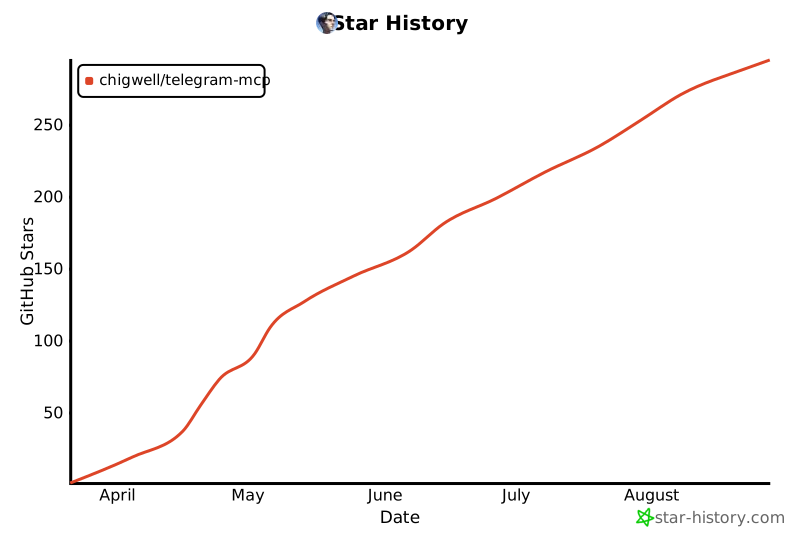](https://www.star-history.com/#chigwell/telegram-mcp&Date)
|
||
|
||
## Contributors
|
||
|
||
<a href="https://github.com/chigwell/telegram-mcp/graphs/contributors">
|
||
<img src="https://contrib.rocks/image?repo=chigwell/telegram-mcp" />
|
||
</a>
|